Best Generative Engine Optimization Tools in 2026
Compare the top generative engine optimization tools for tracking AI citations across ChatGPT, Perplexity, and Gemini. Self-hosted PromptRank cuts costs by 80%.
Most generative engine optimization tools are glorified API wrappers.
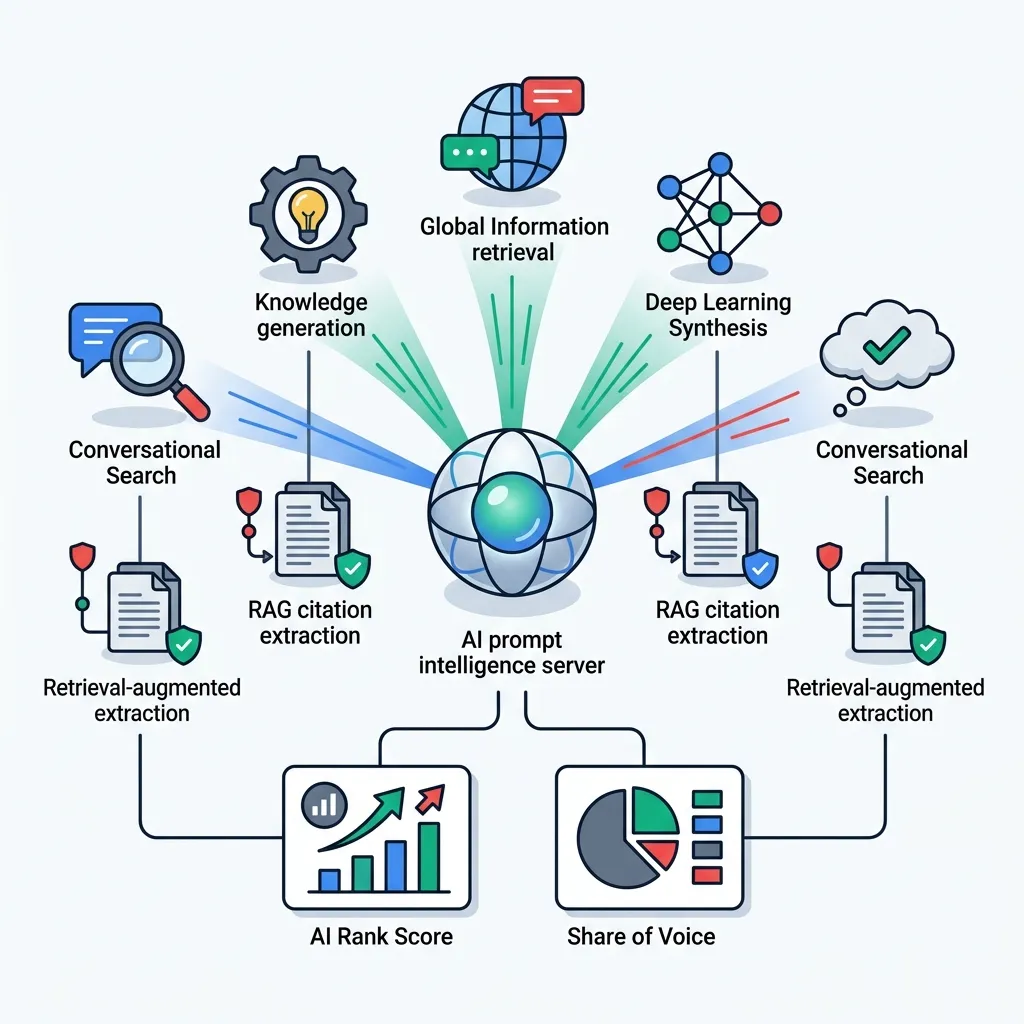
They send a prompt to one LLM, count whether your brand name appears, and charge $2,000 a month for the privilege. We built PromptRank because that approach misses the actual architecture. Real GEO tracking requires fanning out prompts across five AI platforms simultaneously, grounding each query in live web search data, extracting citation URLs from synthesized responses, and calculating share of voice against your competitors. Anything less is a dashboard full of vanity metrics.
If you're evaluating generative engine optimization tools for your team, the feature set and deployment model matter far more than the brand name on the login page.
Key Takeaways
- Feature depth separates tools from toys: Real GEO software must include citation extraction, sentiment analysis, competitor tracking, and source intelligence -- not just brand mention counting.
- Async pipelines enable scale: Worker pipelines fan out prompts across five LLM platforms without blocking the web server. Manual testing can't match that throughput.
- RAG grounding prevents hallucination tracking: Live search integration grounds every prompt in real web results, exposing the exact source URLs AI models actually cite.
- BYOK reduces costs by 80%: Enterprise GEO platforms charge premium subscriptions. Self-hosted PromptRank with Bring Your Own Keys pays raw API costs directly to OpenRouter and Serper.
- Automated re-tracking builds trendlines: Background cron jobs re-run stale prompts every seven days, creating historical visibility data without any manual effort.
How GEO Tools Differ
The difference between useful GEO software and a wrapper is feature depth.
A mention counter tells you your brand appeared in a ChatGPT response. It doesn't tell you what the AI said, which sources it cited, or how your competitor performed on the exact same prompt. Generative engine optimization tools need to extract structured intelligence from unstructured AI responses -- and the best ones do it automatically, across every major platform at once.
Here's how the options compare:
| Feature | PromptRank | Profound.app | Manual Testing |
|---|---|---|---|
| Multi-platform fan-out | 5 engines via OpenRouter | 3 engines | 1 at a time |
| Citation URL extraction | Yes (live search RAG) | Partial | No |
| Sentiment analysis | Yes (treemap visualization) | Basic | No |
| Competitor tracking | Yes (Prompt Gaps) | Yes | No |
| Source Intelligence | Yes (domain attribution) | Limited | No |
| AI Rank Score | Yes (global metric) | No | No |
| Share of Voice | Yes | Partial | No |
| Automated re-tracking | 7-day cron cycle | Manual triggers | No |
| Deployment model | Self-hosted (VPS) | Cloud SaaS | N/A |
| Pricing model | BYOK ($99 license) | $2,000+/month | Free (your labor) |
Visibility Metrics That Actually Matter
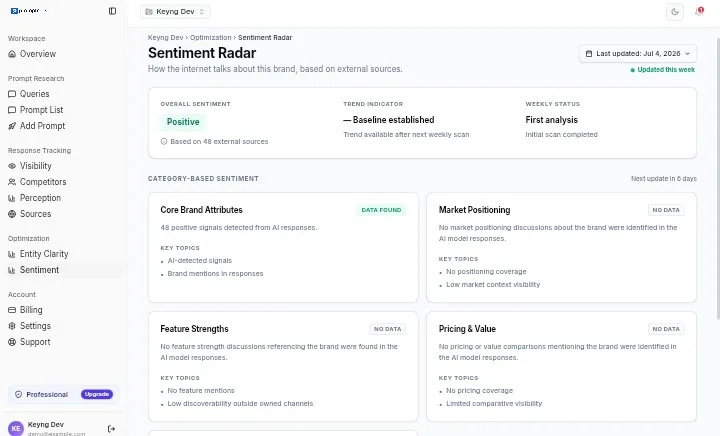
The Visibility Dashboard calculates two primary metrics. AI Rank Score aggregates brand mention frequency, sentiment weight, and citation density across all tracked prompts. Share of Voice divides your positive mentions by the total mentions across all tracked brands in your competitive set.
These numbers replace "position one on Google" with a GEO equivalent. Your AI Rank Score tells you how visible your brand is inside conversational AI responses -- and whether that visibility is positive or not.
One B2B analytics company we worked with had been manually testing prompts in ChatGPT every Friday. When their Sentiment Radar went live inside PromptRank, it revealed that 40% of their brand mentions carried negative sentiment. The AI consistently described their product as "expensive" and "complex to set up." They had no idea. The sentiment treemap let them prioritize which perception problems to fix first, and three months of automated re-tracking showed the sentiment shift after they published comparison content and updated pricing guides.
That's the difference between a mention counter and a GEO platform.
If you need a generative engine optimization tracker with this depth of sentiment analysis out of the box, PromptRank is the fastest path to production.
Automated Prompt Audit Pipelines
Manual prompt testing doesn't scale past 20 queries.
When you're tracking 500 prompts across five LLM platforms, that's 2,500 API calls per cycle. Running those synchronously freezes the interface, times out before completion, and produces inconsistent results depending on which tab you had open. There's no trendline. There's no competitor comparison. There's just a list of responses you typed into a chat window.
PromptRank solves this with an async worker architecture. Every prompt runs through a background pipeline with 10 concurrent threads, dispatched and managed automatically.
The web server stays responsive. You queue prompts, close the tab, and return when results are ready. No babysitting required.
Background Scheduling That Just Runs
The Master Cron job fires every seven days. It queries the database for prompts whose last execution is stale, re-queues them through the worker pipeline, and appends results to the historical trendline. Teams configure the interval per project or per prompt -- weekly for most brands, daily for active campaigns.
This means your visibility data updates automatically. Nobody on your team has to remember to re-test anything.
Here's what that looks like in practice: a growth team at an e-commerce brand tracking 500 prompts used to spend six hours every Monday manually running queries across ChatGPT and Perplexity. After deploying PromptRank, the async pipeline handles all 2,500 API calls in the background overnight. The team opens the dashboard on Tuesday morning and reviews trendlines. They now track three competitors and identify Prompt Gaps -- queries where a competitor appeared but their brand didn't -- without touching a single prompt manually.
Six hours of weekly labor, gone. That's the operational case for async architecture.
Citation Tracking and Source Intelligence
Knowing your brand was mentioned is half the answer. Knowing why is the other half.
AI models don't invent recommendations from memory. They retrieve web pages, read them, and synthesize answers. The URLs they cite determine which brands get recommended. If G2, Reddit, and Forbes dominate the citation graph for your industry, your GEO strategy starts with those publishers -- not with tweaking your homepage copy.
PromptRank integrates Serper.dev to ground every prompt in live search results before the LLM generates its answer. This retrieval-first approach means the AI sees the same web content a real user would find, and the Citation Inspector captures exactly which sources it relied on.
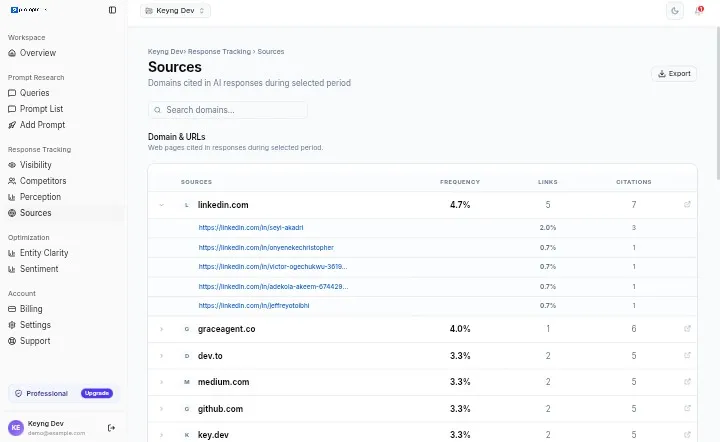
The Source Intelligence module maps which domains appear most frequently in AI citations for your tracked prompts. If Reddit threads about "best CRM for startups" consistently get cited by ChatGPT, that's where you need a presence. It's not a content strategy question. It's an intelligence question -- and PromptRank gives you the answer in a data table.
This is the foundation of effective generative engine optimization. You optimize for the sources AI models trust, not for the AI models themselves.
If you need a dedicated LLM citation tracker for deeper citation analysis, PromptRank's Citation Inspector extracts the exact sentences where your brand appears and highlights the reference links backing each claim.
Multi-Engine Visibility Reports
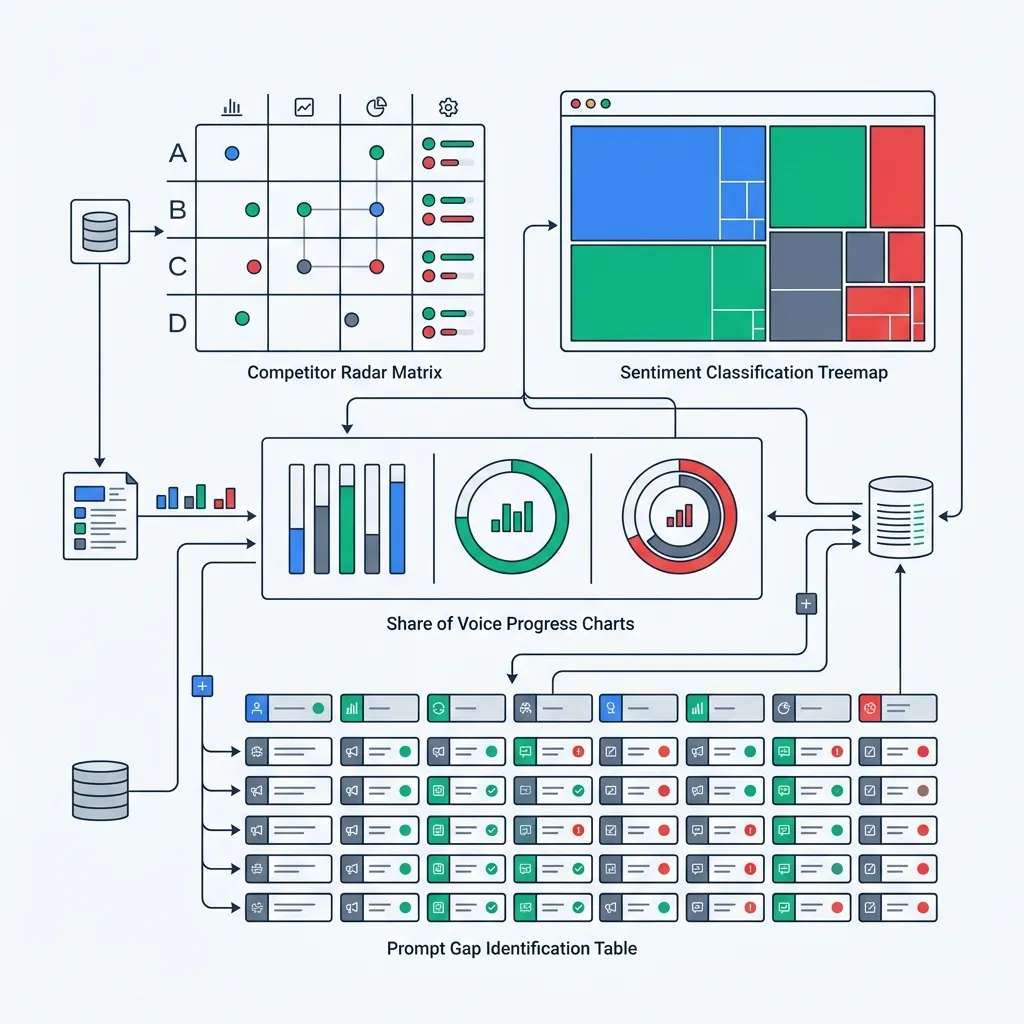
Dashboards should reveal gaps, not just confirm wins.
PromptRank's dashboard surfaces four visualization layers. The Competitor Radar plots your brand against rivals on mention frequency, sentiment, and citation share. The Sentiment Treemap categorizes AI-associated attributes as positive, neutral, or negative. The Share of Voice chart tracks your percentage of total brand mentions over time. The Prompt Gaps table lists queries where competitors appeared and you didn't.
These visualizations turn raw API response data into board-ready reports. You can export citation evidence, sentiment shifts, and competitor gap analyses without manual formatting.
For teams specifically tracking ChatGPT performance, the ChatGPT search rank tracker capability inside PromptRank isolates ChatGPT Search results and benchmarks your visibility against the largest AI search platform.
Competitor Intelligence in Practice
The Competitor Intelligence module tracks rival brands alongside yours. For every tracked prompt, PromptRank logs which brands the AI recommended, which it excluded, and which sources it cited for each recommendation. The Prompt Gaps report identifies queries where a competitor received a recommendation and your brand was absent.
Every Prompt Gap is a content opportunity. Publish on the sources the AI cited, and you close the visibility gap. That's not a theory -- it's the exact playbook our clients run on a monthly basis.
FAQ
What are generative engine optimization tools?
Generative engine optimization tools track, analyze, and optimize how brands appear inside AI-generated search responses from platforms like ChatGPT, Perplexity, and Gemini. They query LLM APIs, extract citation URLs, measure share of voice, and identify visibility gaps against competitors.
How much do GEO tools cost?
Enterprise SaaS platforms like Profound.app charge $2,000 or more per month. Self-hosted alternatives like PromptRank use a BYOK model -- you pay $99 for the software license and raw API costs directly to OpenRouter and Serper.dev. This typically reduces total cost by 80%.
Can I track across all major AI platforms?
Yes. PromptRank fans out prompts across ChatGPT, Claude, Gemini, Grok, and Perplexity via OpenRouter. A single tracked prompt executes across all five platforms simultaneously through background worker threads.
Does self-hosted GEO software need a VPS?
Self-hosted GEO tools like PromptRank require a Linux VPS because they rely on persistent background workers and Redis job queues. Cloud-hosted SaaS platforms run on their own infrastructure but charge subscription premiums for that convenience. If you'd rather not manage the server, our VPS Installation Plan at a flat $150 covers the full setup.
How does citation tracking work?
PromptRank queries Serper.dev for live search results before generating AI responses. This grounding step exposes the exact source URLs the LLM relies on. The Citation Inspector extracts those URLs and maps which authority domains control your AI narrative.
The Bottom Line
Generative engine optimization tools need real architecture to produce real intelligence.
Mention counters and single-platform wrappers can't track citations across five AI engines, measure sentiment trends, or identify Prompt Gaps against competitors. The tools that matter dispatch prompts through async worker pipelines, ground queries in live search data, and turn unstructured AI responses into structured visibility metrics -- automatically, on a schedule, without anyone on your team lifting a finger.
We built PromptRank to do exactly that. It's a self-hosted, white-label GEO SaaS with a BYOK model that cuts costs by 80% compared to enterprise subscriptions. The $99 license gives you the full platform. The VPS Installation Plan at $150 means our engineering team handles the entire server setup, Redis configuration, and cron scheduling -- so you're tracking AI citations within 48 hours, not 48 days.
If your marketing team is still testing prompts manually, the gap between you and your competitors is widening every week. That's just the reality of how generative search works now. The question isn't whether to track it. It's whether you track it on your own terms or pay $2,000 a month to someone else for the privilege.