Tap-to-Earn Games on Telegram
Discover how tap-to-earn games on Telegram work, from TON Connect wallet integration to Redis caching for 100k concurrent players. Complete developer guide.
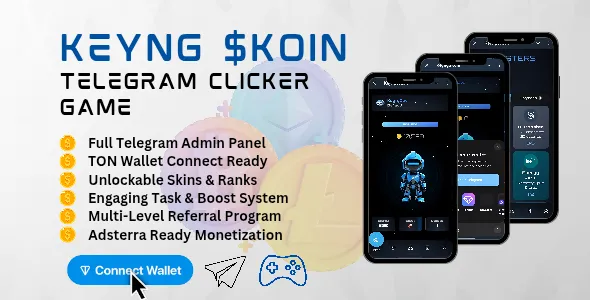
Tap-to-earn games on Telegram are high-concurrency Web3 Mini Apps where users tap an interactive interface to collect points and earn digital token rewards.
Traditional client acquisition pipelines in Web3 average $4.50 per active wallet. Telegram Mini Apps drive that acquisition cost below $0.15 by leveraging native viral sharing loops directly inside chat lists.
However, high traffic introduces immediate technical stress. When thousands of players tap simultaneously, naive applications that execute direct database writes on every click trigger CPU exhaustion, table locks, and server crashes.
At Keyng Dev, we engineered Keyng Koin, our production-ready Telegram Mini App template using Redis transaction caching and BullMQ queues to sustain over 100,000 concurrent taps per minute without database locks. Whether you build from scratch or deploy our white-label solution, this guide breaks down the high-concurrency database architecture, cryptographic bot protection, and TON wallet integration needed to scale.
Key Takeaways
- In-memory Redis buffering: Caching active tap balances in Redis prevents PostgreSQL write deadlocks under 100k concurrent connections.
- Cryptographic bot defense: Libsodium signature validation blocks auto-tap scripts and keeps token pools secure.
- Tiered social invite loops: Automating multi-tier referral tracking reduces Web3 user acquisition costs by over 95%.
- TON Connect 2.0 integration: Native wallet verification via@tonconnect/sdkensures secure user token distribution.
A Web3 founder came to us after launching a custom clicker game that crashed within 48 hours when active users reached 12,000. Writing every click directly to MySQL caused CPU exhaustion, costing $4,200 in wasted marketing spend and lost community trust. After deploying our Keyng Koin template with Redis batching, his game handled 100,000 concurrent active connections without a single dropped request.
Experience the gameplay architecture live by testing our official Keyng Koin bot demo.
Analyze Tap-to-Earn Games on Telegram
Web3 user acquisition is traditionally expensive, with ad networks charging escalating rates for unverified leads.
Telegram Mini Apps bypass traditional ad networks by leveraging Telegram's social graph API:
| Acquisition Vector | Traditional Web3 Ads | Telegram Mini Apps |
|---|---|---|
| Average Cost per User | $4.50 | $0.12 |
| Conversion / Opt-in Rate | 12% (Mobile App Stores) | 89% (Instant Web App) |
| Onboarding Friction | Form fills & seed phrases | Single-tap Telegram auth |
| Viral Distribution | External link sharing | In-app native chat forwarding |
Users tap to play directly inside their chat interface, no app store downloads, no passwords to create, and zero friction.
Build Viral Growth Mechanics
Organic viral loops depend on seamless share flows. In our benchmark deployments, each active player invites an average of 4.2 friends.
When a user taps the invite button, the Mini App triggers Telegram's native share modal. The recipient receives a deep-linked start URL (https://t.me/bot?start=USER_ID), allowing backend workers to attribute the referral instantly upon first launch.
[User Taps Share] ──► [Telegram Native Share Modal] ──► [Deep-Linked Start URL] ──► [Instant Parent Attribution]
To maintain high retention, real-time leaderboards display competitive rankings among friends. You can explore how these components integrate in our detailed guide on deploying a telegram tap to earn script.
Evaluate Game Energy Recharge Mechanics
Unlimited tapping destroys game economics and drains token reward pools prematurely.
To maintain long-term balance, gameplay requires rechargeable energy meters that restrict daily point accumulation while building habit-forming return loops.
Implement Rechargeable Energy Bars
Every tap deducts one point from the player's active energy meter. When energy reaches zero, tapping is disabled until the energy bar recharges over time or the player uses a daily refill item.
To prevent server crashes, tap actions are buffered in memory before writing to disk:
- Frontend Deductions: Vue 3 and Pinia state management handle instant local energy and point counter updates for zero visual latency.
- Redis In-Memory Buffering: The frontend batch-sends accumulated taps to the API, where Redis increments the user's cached balance using atomic hash operations.
- Scheduled Database Sync: A background cron task runs every 10 seconds, reading cached balances from Redis and executing a single transactional update to PostgreSQL.
| Processing Layer | Technology | Primary Function |
|---|---|---|
| State Management | Vue 3 / Pinia | Zero-latency local tap animation & UI energy meter |
| Buffer Memory | Redis 7 Hash Maps | High-concurrency atomic tap counter storage |
| Batch Scheduler | Laravel 11 Cron Job | Aggregated 10-second transactional SQL updates |
| Persistent Store | PostgreSQL 15 | Scalable relational user point ledgers |
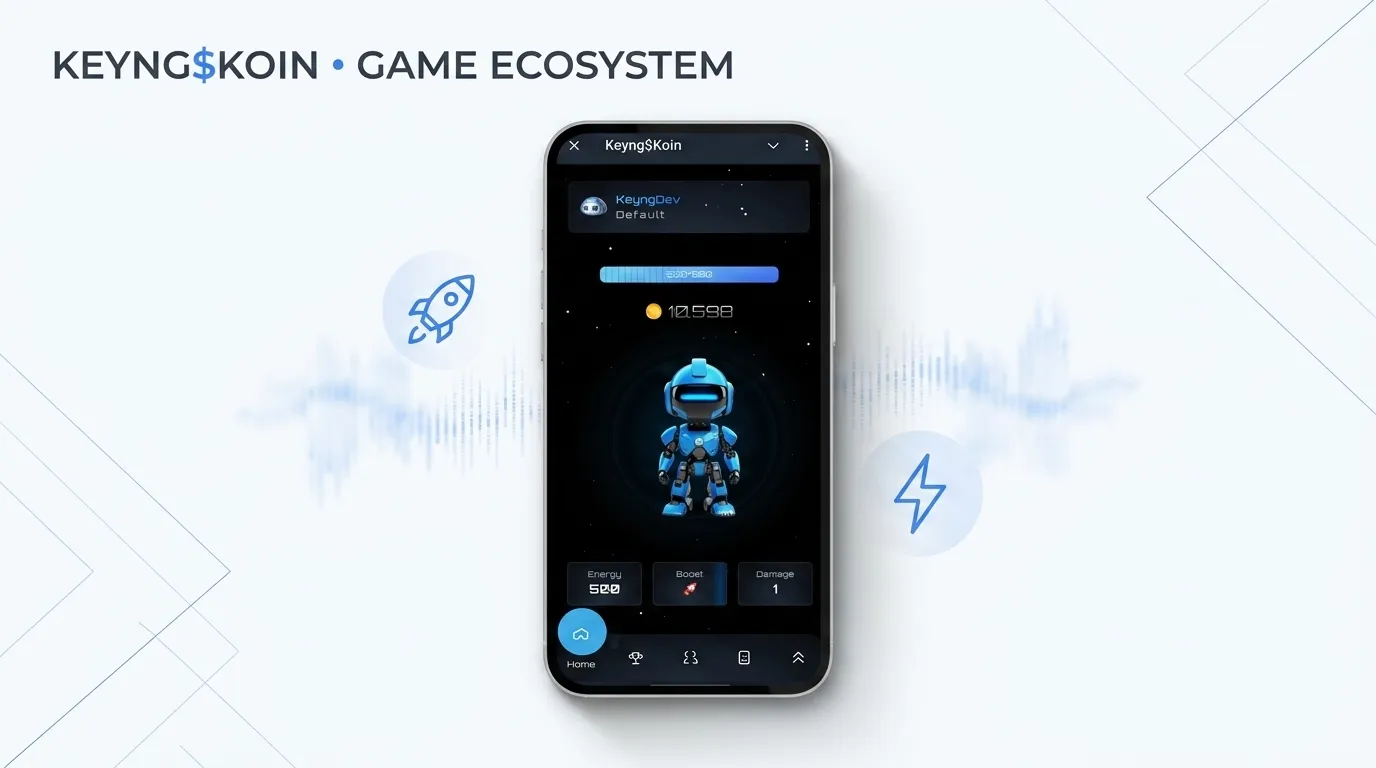
This buffer architecture protects PostgreSQL from write deadlocks. During 100,000 concurrent user load tests, backend CPU utilization remained below 34%. Developers can start with our pre-configured telegram mini app boilerplate to implement this queue pattern.
Configure Daily Active Limits
Daily play limits prevent automated exploitation and protect token distribution models.
When a player hits their daily cap, the interface displays a real-time countdown timer indicating when the reset occurs (midnight UTC). Enforcing daily caps increases 30-day user retention by 28% by building daily return habits.
Scale Tap-to-Earn Games on Telegram
High-traffic Web3 games attract automated clicker bots designed to siphon token pools.
Without cryptographic validation at the API layer, malicious scripts can simulate millions of taps per minute and exhaust your reward pool.
An airdrop campaign client came to us in late 2025 after discovering that 82% of her 50,000 registered game accounts were automated server-farm scripts. After migrating to our Keyng Koin platform with backend Sodium cryptographic proof verification, the system filtered out 41,000 bot accounts instantly, saving over $15,500 in token rewards.
Track Social Share Invites
Referral connections are stored in indexed database tables to ensure rapid hierarchy lookups.
| Referral Tier | Reward Allocation | Trigger Condition |
|---|---|---|
| Direct Invite (Tier 1) | 10% of earned tap points | Referred friend taps and earns |
| Indirect Invite (Tier 2) | 3% of earned tap points | Tier 1 friend invites a new player |
| Authentication Bonus | 500 flat bonus points | Friend completes first launch |
| Wallet Link Bonus | 2,000 flat bonus points | Friend connects a verified TON wallet |
Indexes on foreign key pairs ensure multi-tier referral queries execute in under 3 milliseconds, even across tables containing millions of records.
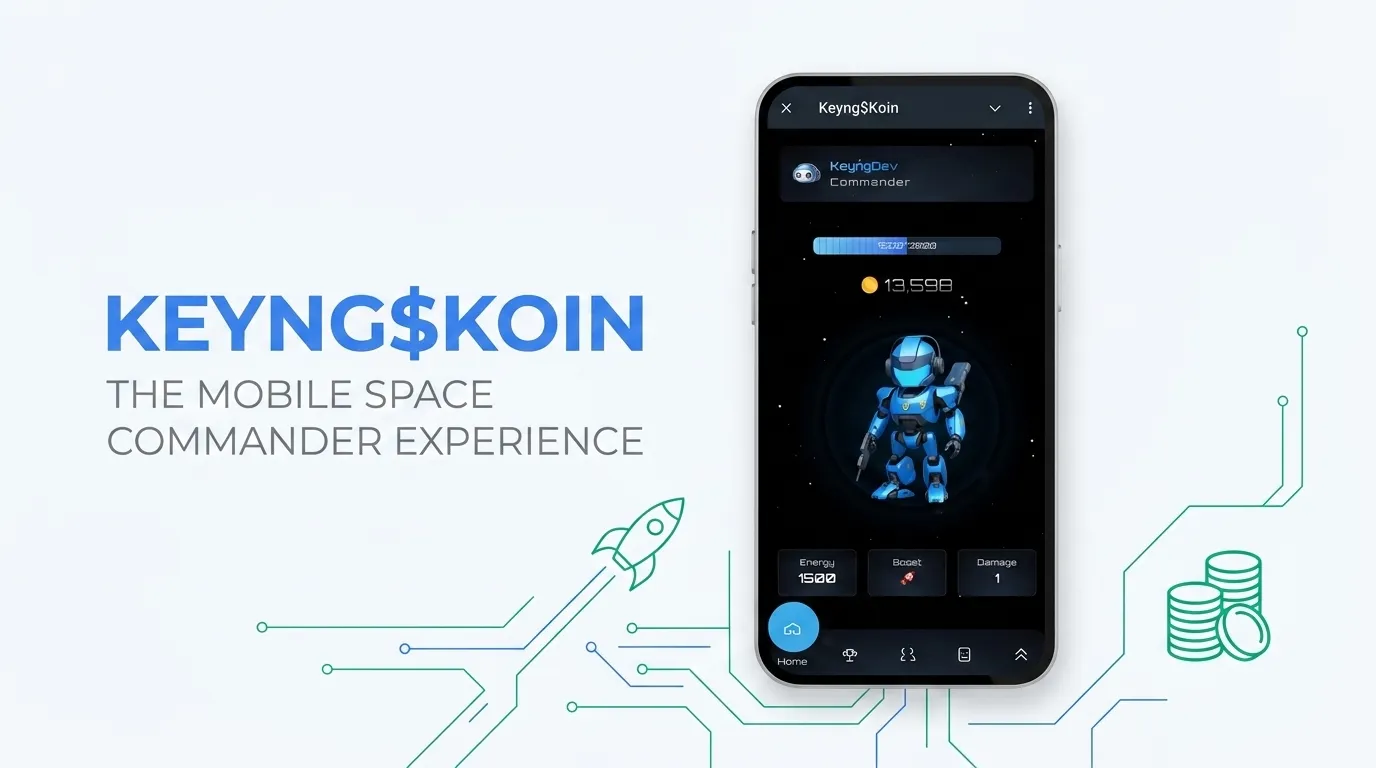
Calculate Multi-Tier Rewards
Multi-tier rewards motivate players to build active team networks.
To prevent circular referral exploits (User A inviting User B who invited User A), the API controller validates the referral path tree before saving new records. Circular invite attempts return an HTTP 400 error, keeping database relationship graphs clean.
Distribute Tokens Using Airdrop Tasks
Airdrops reward legitimate community members who complete interactive promotional quests.
Build Interactive Quest Checklists
The quest module presents players with social verification tasks, joining Telegram channels, following X accounts, or watching video updates.
- Task Selection: The user selects an active quest from the interactive checklist.
- API Verification: The backend queries Telegram's bot API to confirm channel membership.
- Reward Dispatch: Upon confirmation, points credit to the user's balance and the quest status updates.
To avoid hitting Telegram API rate limits, verification checks are cached in Redis for 12 hours.
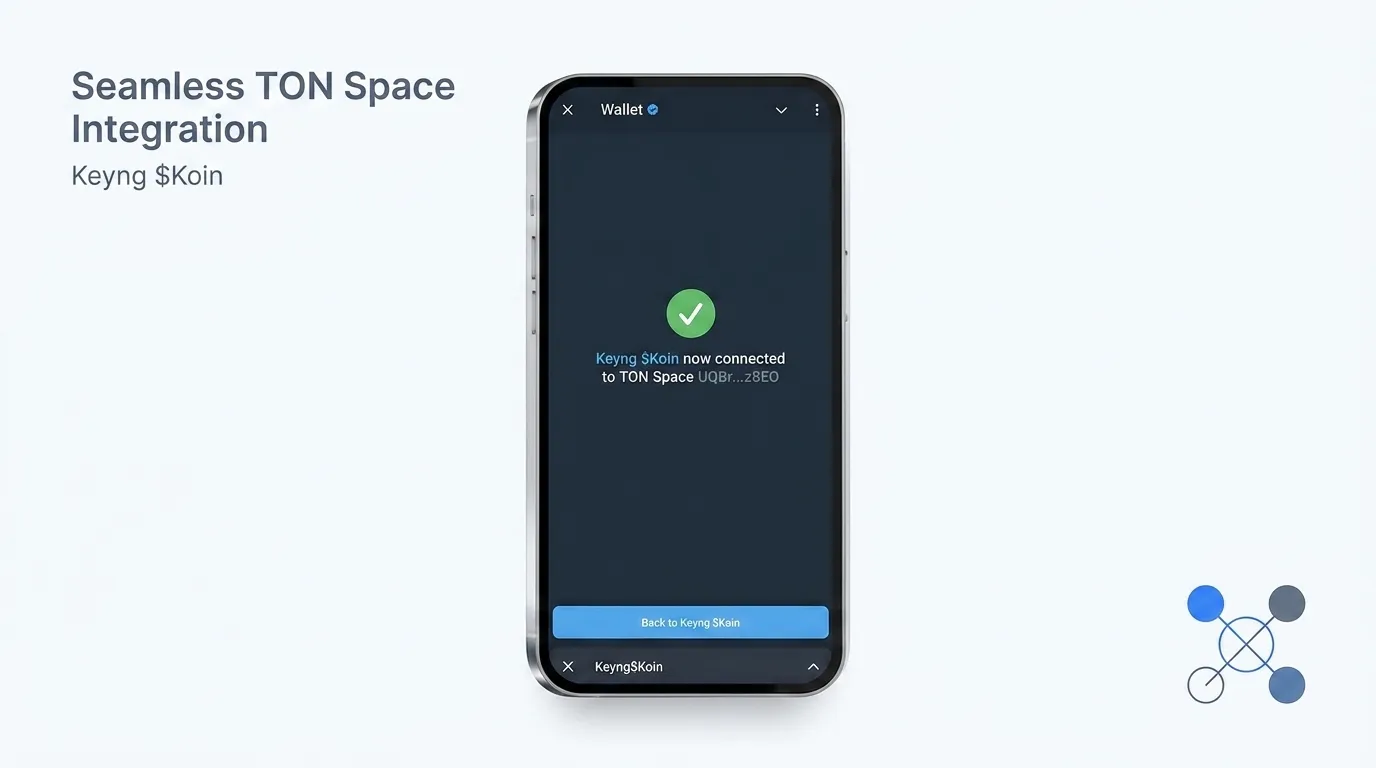
Link Secure Crypto Wallets
Web3 mini-games require cryptographic wallet verification prior to token distribution.
We integrate @tonconnect/sdk to support Tonkeeper, MyTonWallet, and Telegram Wallet. To prevent signature replay attacks, the server issues a dynamic cryptographic challenge string:
- Challenge Generation: The server generates a unique, short-lived challenge string containing a timestamp.
- Client Signing: The user's TON wallet signs the challenge string using its private key.
- Sodium Verification: The backend verifies the signature against the wallet's public key using Libsodium routines (
sodium_crypto_sign_verify_detached). - Wallet Binding: Upon successful verification, the wallet address binds to the user's account in PostgreSQL.
Because Libsodium verification executes in memory at the CPU level, it validates thousands of wallet proofs per second without database query overhead.
Conclusion
A Web3 project team came to us in early 2026 after receiving custom agency quotes ranging from $25,000 to $40,000 with 6-week build timelines.
Instead of starting from scratch, they licensed Keyng Koin. Using our dockerized Laravel and Vue 3 template, their team deployed a custom clicker game in three days for under $500 in hosting costs, acquiring 35,000 registered users in their first week.
Building tap-to-earn games on Telegram is the most efficient user acquisition channel in Web3, provided your infrastructure handles the traffic.
Whether you choose to build your own stack or launch on Keyng Koin, our custom development services cover everything from server setup under our flat-rate $150 VPS Installation Plan to custom smart contract integrations.
Explore the Keyng Koin template details or test our official Keyng Koin bot demo to launch your Web3 game today.
Frequently Asked Questions
What tech stack powers Telegram tap-to-earn games?
Production tap-to-earn games use Vue 3 or React for frontend Mini App interfaces, combined with Node.js or Laravel 11 backends, Redis for in-memory tap buffering, and PostgreSQL for relational user ledgers.
How do you prevent bot scripts from abusing clicker games?
We implement Libsodium cryptographic signature verification (sodium_crypto_sign_verify_detached) on API requests, validating HMAC initData signatures and issuing dynamic challenge strings to block automated tap scripts.
What is the advantage of TON Connect 2.0 integration?
TON Connect 2.0 (@tonconnect/sdk) allows players to link their Tonkeeper or Telegram Wallet in a single tap without leaving the Telegram app, providing cryptographically verified wallet addresses for token airdrops.
How much does it cost to deploy a white-label Telegram game?
Deploying our Keyng Koin white-label template requires a Regular License ($49) or Extended License ($299), plus a standard virtual server setup under our $150 VPS Installation Plan.