How a Custom Software Development Agency Works
Learn how a custom software development agency builds Next.js SaaS MVPs with PostgreSQL, Docker, and Redis. See our delivery process, pricing, and tech stack.
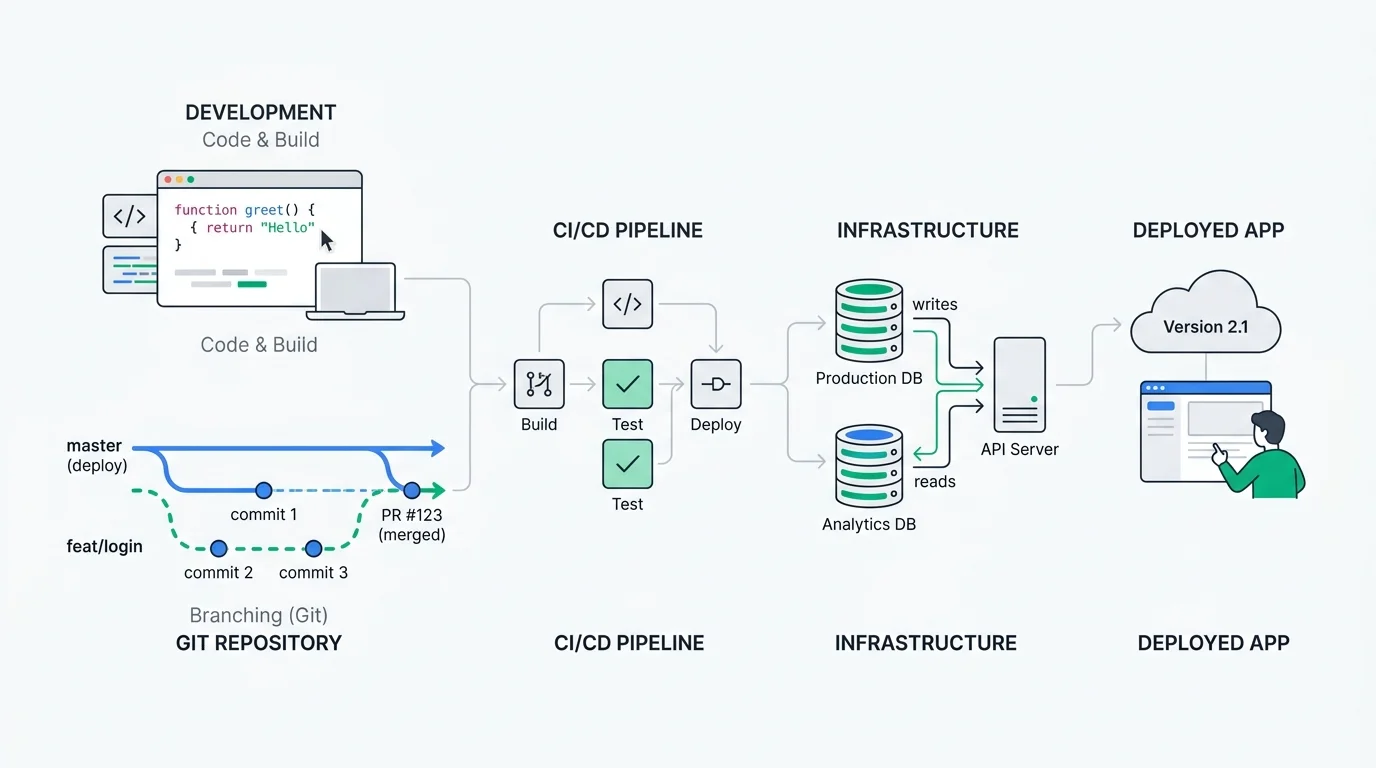
The lowest software development quote you receive will often become the most expensive technical decision your company makes this year.
Committing your product vision, launch timeline, and engineering budget to external developers is a high-stakes decision. You need radical technical transparency, not generic agency marketing promises.
Proper custom software development requires specialized developer roles, two-week agile sprint cadences, direct communication without bloated account managers, and total code ownership handoffs from day one.
At Keyng Dev, we build high-performance web applications, TON mini-games, and custom AI systems. Whether you are building an initial SaaS MVP or replacing a broken legacy codebase, our custom development services cover every phase of the software delivery pipeline under full client ownership.
Key Takeaways
- Specialized role squads: High-performing dev teams separate responsibilities between a Product Director, Senior Backend Engineer, and Frontend Developer.
- Bi-weekly agile sprints: Deliverable features build in 14-day cycles, concluding with live staging URL demos rather than static progress decks.
- Direct developer access: Real-time communication channels bypass account management translation layers, preventing specification errors.
- 100% asset ownership: Git code repositories, Docker configs, and server root keys transfer directly to your team control at key milestones.
Understand Custom Software Development Agency Roles
Hiring a custom software development agency is not about buying raw developer hours.
It is about deploying a structured engineering squad where each developer owns a specific layer of the application architecture.
A logistics client came to us after hiring a legacy software firm that assigned a single generalist developer to build their entire core system. The developer executed unindexed SQL queries directly against production tables, locking database connections and crashing the app during peak morning traffic.
When our Senior Backend Engineers and Product Director took over, we separated the API routing layer from the frontend interface and introduced Redis queue workers. Database lock contention vanished immediately, and response latency dropped by 73%.
Explore our engineering team's credentials and repository standards on the Keyng Dev About page.
Meet the Product Director
The Product Director acts as the technical bridge between your business goals and the engineering squad.
They translate operational requirements into clear technical scopes, maintain the product backlog, and prioritize sprint deliverables. Rather than writing raw code, they ensure system logic matches your business model.
They decompose complex features into user stories, coordinate daily developer tasks, and ensure the team builds software that solves real market problems.
Hire Senior Backend Engineers
The Senior Backend Engineer architects the database schema, structures RESTful and GraphQL API endpoints, and configures server middleware.
They manage Redis caching layers, implement queue workers, and eliminate database race conditions. Using type-safe schemas and Google Genkit prompt validation routines, they build robust server logic.
Their focus is system throughput, database stability, and application security, ensuring server connections never exhaust when user traffic scales.
Select Dedicated Frontend Developers
The Frontend Developer converts product wireframes into fast, responsive web interfaces.
They write type-safe React and Next.js code, optimize initial loading states, and guarantee cross-device mobile performance.
Working directly with backend engineers to consume API payloads, their work directly drives Core Web Vitals performance like Largest Contentful Paint (LCP) and Cumulative Layout Shift (CLS).
Define Agile Project Sprint Cycles
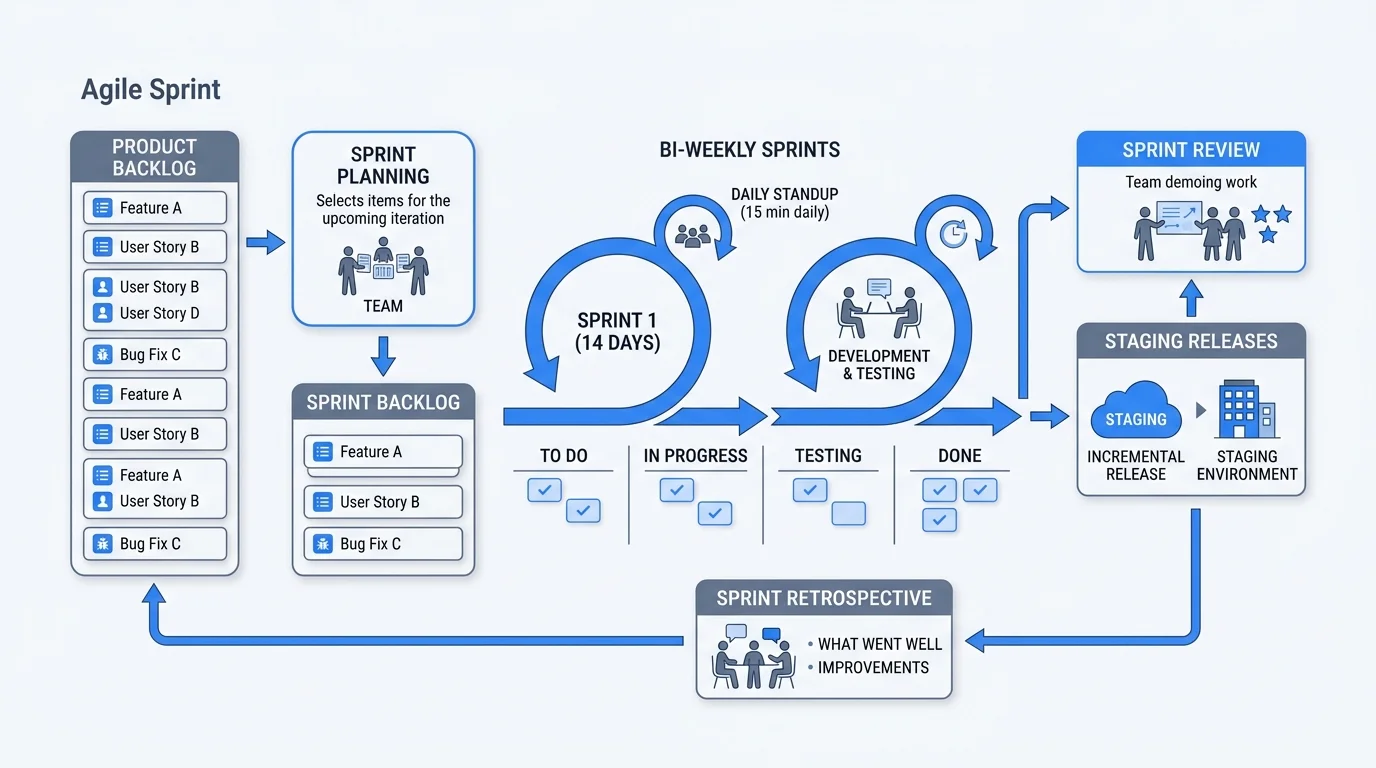
Agile sprint cycles eliminate the risk of building software behind closed doors.
By dividing the project timeline into distinct two-week increments, your team reviews functional staging code frequently throughout development.
Run Project Kickoff Meetings
Every custom development project begins with a structured technical kickoff:
1. Schema Mapping: The systems architect maps the PostgreSQL schema and defines API contracts.
2. Environment Provisioning: The team configures dedicated Git repositories, staging servers, and automated build pipelines.
3. Sprint Alignment: Developers and client stakeholders align on technical standards and acceptance criteria.
This initial preparation ensures developers begin writing code with a complete architectural blueprint.
Structure Biweekly Sprint Cadences
A standard 14-day sprint follows a disciplined, predictable execution flow:
| Agile Milestone | Duration | Primary Focus | Client Deliverable |
|---|---|---|---|
| Discovery & Scoping | 1 Week | Architecture design & schema mapping | Interactive wireframes & API map |
| Sprints 1–3 | 6 Weeks | Core application logic & database queries | Staging URL deployments |
| Sprint 4 | 2 Weeks | Performance tuning & security audits | Live demo & audit report |
| Handoff | 3 Days | Server configuration & credential transfer | Git repository & root VPS access |
Daily 15-minute standup meetings keep developers aligned, while bi-weekly staging deployments allow stakeholders to verify functional features as they complete.
Execute Continuous Deployment Cycles
Continuous integration and deployment pipelines ensure staging servers update automatically whenever developers merge code branches.
The automated pipeline executes unit test suites, validates type safety, and compiles the application inside Docker containers. This approach guarantees clients test live features continuously, eliminating unexpected surprises at final release.
Partnering with an experienced custom software development company ensures your project adheres to these automated delivery standards.
Optimize Client Review Communication Flows
Legacy agencies hide their developers behind non-technical account managers.
This account management barrier creates communication lag, distorts technical requirements, and causes schedule delays.
Use Realtime Dashboard Chats
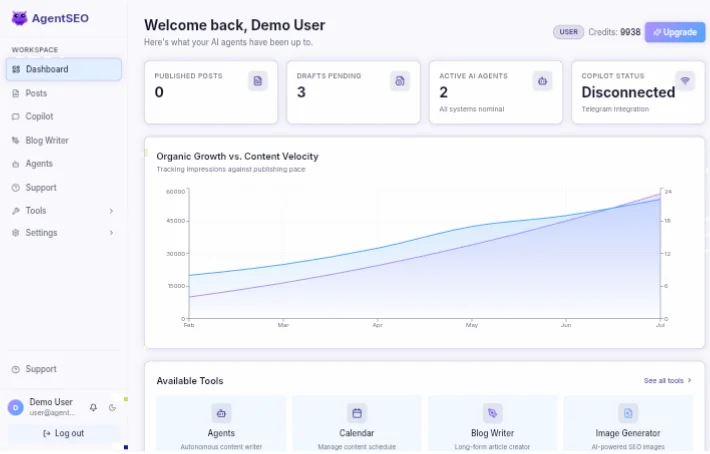
Direct communication ensures technical specifications are translated accurately.
Clients chat directly with the lead engineers and systems architects building their software via dedicated project channels.
This direct access accelerates bug resolution, clarifies API requirements instantly, and eliminates week-long email chains.
A dental clinic client hired a legacy development vendor to build an automated appointment booking system. The account manager promised delivery in 30 days but never gave the developers direct access to the clinic's workflow team. The vendor built a static web form instead of the conversational AI calendar pipeline required, costing $4,000 in lost patient appointments.
When they migrated to Keyng Dev, we connected them directly with our lead architect and delivered the complete Dental Clinics AI Receptionist sandbox in a single sprint cycle.
Deliver Biweekly Sprint Demos
At the end of each two-week sprint, the engineering squad conducts a live walkthrough of completed features on a staging URL.
This is a functional demonstration of working software, not a static presentation. You test user flows, verify database inputs, and review UI responsiveness in real time.
Establish Feedback Iteration Loops
Sprint demos feed directly into structured feedback loops.
If a feature requires adjustments, the Product Director logs the revision in the sprint backlog and schedules it for the next cycle. This transparent iteration prevents scope drift while keeping project budgets aligned with progress.
Explore our custom engineering service plans on our custom software development services page, or deploy your staging environment using our flat-rate $150 VPS Installation Plan.
Secure Custom Software Development Agency Handoffs
The ultimate measure of agency performance is the handoff process.
You must maintain full ownership of your source code, server credentials, and infrastructure configurations.
Manage Direct Git Transfers
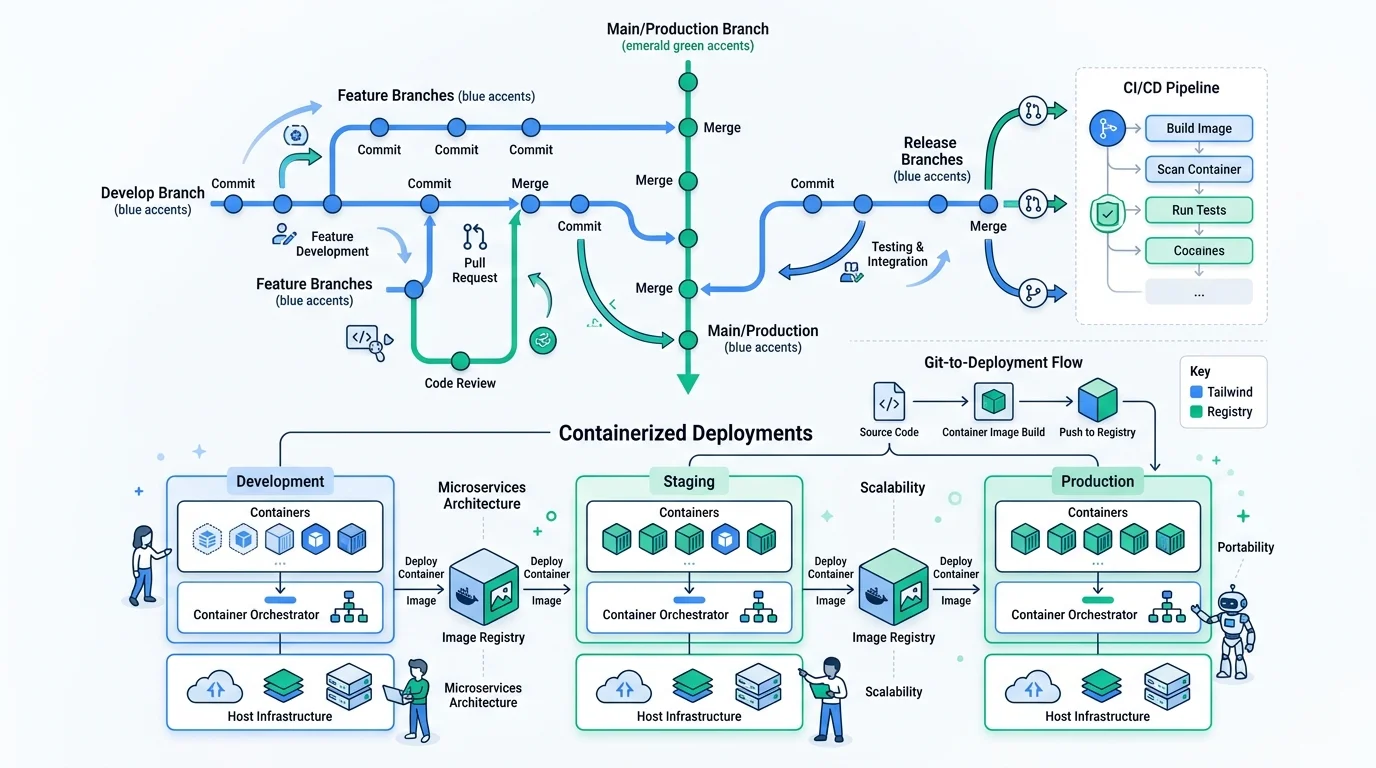
Your Git source repository must belong to your organization from day one.
The agency configures your GitHub or GitLab organization, pushes initial commits directly to your branches, and manages access permissions. Upon project completion, admin rights are verified and agency access tokens are revoked.
A logistics startup hired a vendor to build a custom API integration. After paying the final invoice, the vendor refused to release the Git repository or VPS server keys, demanding a $5,000 "exit fee."
Our engineering team stepped in, audited their public endpoints, rewrote the API architecture in Next.js, and deployed it to a clean Ubuntu VPS within one week, transferring full root keys and repository ownership on day one.
Tune Ubuntu VPS Environments
Deploying custom software requires a secure, fine-tuned server environment.
Our engineers provision Ubuntu VPS instances, configure UFW firewalls, setup SSL certificates, and tune database connection pools to handle traffic spikes.
| Infrastructure Layer | Technology Selection | Operational Purpose |
|---|---|---|
| Web Application | Next.js / Node.js | High-concurrency server-side rendering & API routing |
| Database Engine | PostgreSQL 15 | Relational data persistence with strict type validation |
| In-Memory Cache | Redis 7 | High-speed queue storage & session state management |
| Process Management | PM2 / Docker | Persistent process uptime & container isolation |
Relying on a tuned VPS environment rather than expensive managed cloud platforms keeps your monthly hosting infrastructure fees predictable and low.
Validate Dockerized Server Configurations
Docker containers make your application completely portable across cloud providers.
The agency writes container configurations that isolate the web application, database, and caching layers into independent services.
This containerization guarantees your application runs identically on a developer's laptop, a staging server, and your production environment. If you need custom multi-platform builds, read our guide on custom mobile software development to explore hybrid stack options.
Conclusion
Understanding how a professional custom software development agency operates is critical to executing a successful software build.
By deploying specialized engineering squads, adhering to two-week agile sprint cadences, and maintaining direct developer communication, you eliminate the risks associated with custom software projects. Demanding full Git repository ownership and VPS root access at kickoff ensures complete control over your technical assets.
At Keyng Dev, we engineer custom Next.js web applications, high-concurrency Telegram mini-games, and enterprise AI systems under full client code ownership.
Ready to build your next application? Explore our custom development services, book a flat-rate $150 VPS Installation Plan, or contact our engineering squad to discuss your project requirements.
Frequently Asked Questions
How does a custom agency differ from freelancers?
A custom software development agency provides a dedicated, coordinated engineering squad with Product Director oversight, automated testing pipelines, and staging deployment workflows. Freelancers often split focus across multiple clients and may lack end-to-end system design capabilities.
Why use two-week agile sprint cycles?
Agile two-week sprints maintain short feedback loops and clear project milestones. Reviewing a live staging build every 14 days allows you to spot design or logic issues early, keeping project timelines and budgets aligned.
Who owns the Git repository and server keys?
You do, from day one. Keyng Dev sets up your GitHub organization and provisions your staging server under your control. Complete admin credentials and root keys belong exclusively to your business.
Can a custom agency build high-concurrency Web3 apps?
Yes. Our engineering team built Keyng Koin, a white-label Telegram Mini App on the TON blockchain, using Redis caching and BullMQ queue workers to handle 100k+ concurrent transactions without database contention.